Practical Ingredient Swaps
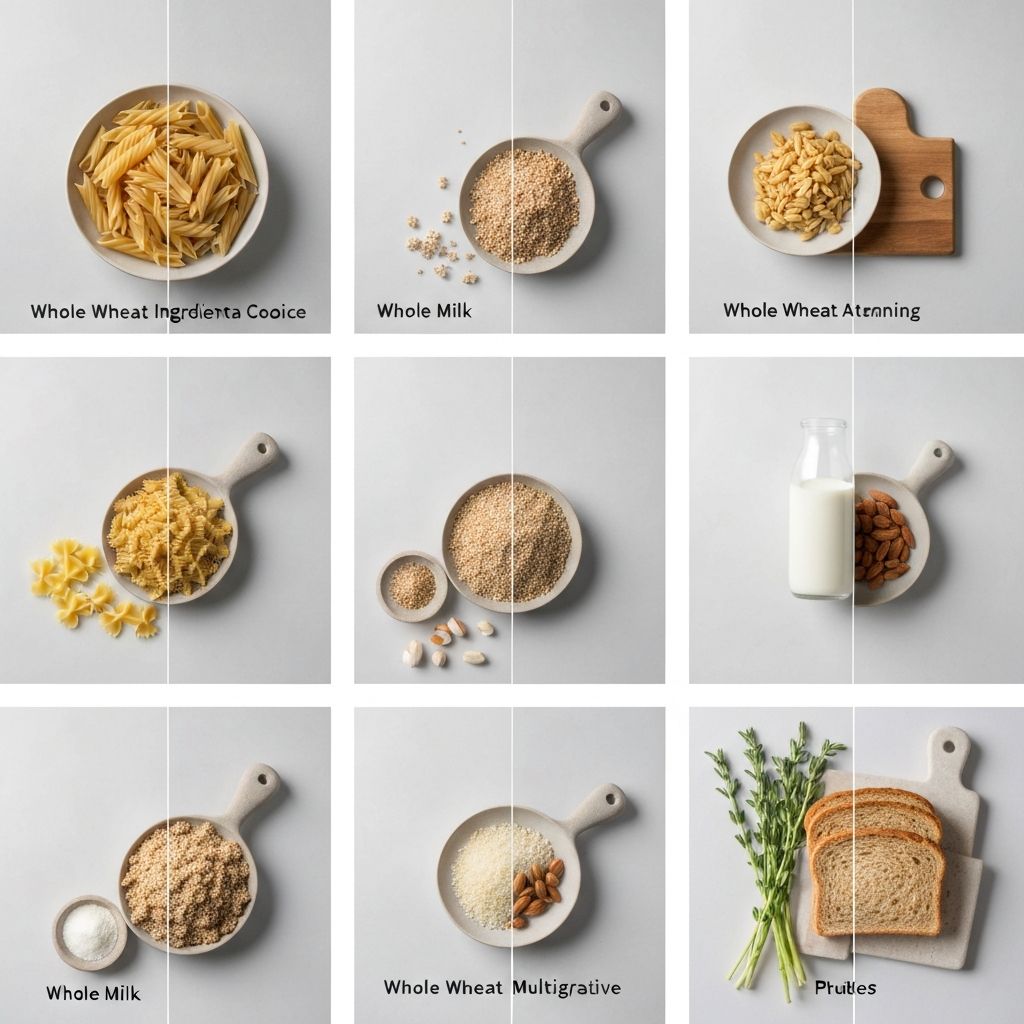
Learn about common ingredient substitutions used in everyday cooking and how different ingredients compare in terms of calorie content.
Introduction to Ingredient Swaps
Many traditional recipes can accommodate alternative ingredients without substantially changing the character of the dish. Understanding how different ingredients compare provides educational insight into food composition and calorie management.
This article presents practical examples of ingredient substitutions commonly discussed in nutritional education. These examples illustrate general principles rather than specific recommendations for any individual.
Breakfast Ingredient Swaps
Bread and Grains
White bread and whole grain bread contain similar calorie amounts, but some people explore lower-calorie alternatives. English muffins typically contain fewer calories than bagels due to size differences. For those interested in reducing grain-based calories, alternatives like lettuce wraps or portobello mushroom caps can serve as bread substitutes.
Breakfast Proteins
Egg whites contain significantly fewer calories than whole eggs because the yolk contains all the fat. Some people use a mixture of whole eggs and egg whites to balance nutrition with calorie reduction. Turkey bacon typically contains fewer calories than pork bacon due to lower fat content.
Spreads and Toppings
Butter and margarine are both calorie-dense. Alternatives like avocado provide healthy fats with additional nutrients, though calorie content remains substantial. Nut butters vary in calorie content, but powdered peanut butter contains significantly fewer calories than regular peanut butter because most of the oil has been removed.
Lunch and Dinner Swaps
Pasta and Rice Alternatives
Regular pasta contains approximately 200 calories per cooked cup. Alternatives like:
- Zucchini noodles contain approximately 20 calories per cup
- Spaghetti squash contains approximately 40 calories per cup
- Shirataki noodles contain minimal calories due to their high fiber, low digestible carbohydrate content
- Whole wheat pasta has similar calories to regular pasta but different fiber content
Similarly, white rice contains approximately 200 calories per cooked cup, while cauliflower rice contains approximately 25 calories per cup due to its vegetable base.
Protein Preparations
Cooking method significantly affects calorie content. Grilled or baked proteins contain only the calories from the meat itself, while fried versions absorb additional calories from cooking oil. Removing skin from poultry before eating reduces fat and calorie content.
Comparing protein sources per 100-gram serving:
- Chicken breast (skinless): approximately 165 calories
- Ground turkey (lean): approximately 150 calories
- Salmon: approximately 200 calories
- White fish (cod, haddock): approximately 80-90 calories
- Tofu: approximately 75 calories
- Legumes (beans, lentils): approximately 115 calories
Dairy in Cooking
Heavy cream, commonly used in sauces, contains approximately 340 calories per 100ml due to its high fat content. Alternatives include:
- Half-and-half: approximately 130 calories per 100ml
- Whole milk: approximately 60 calories per 100ml
- Evaporated skim milk: approximately 80 calories per 100ml, provides creaminess with less fat
- Greek yogurt: approximately 60 calories per 100g for low-fat versions, adds tanginess
Baking and Dessert Swaps
Fat Replacements
Baking typically requires fat for moisture and texture. Oil and butter contain approximately 120 calories per tablespoon. Partial substitutions include:
- Unsweetened applesauce: approximately 10 calories per tablespoon
- Mashed banana: approximately 12 calories per tablespoon
- Greek yogurt: approximately 10 calories per tablespoon (low-fat)
- Pumpkin puree: approximately 5 calories per tablespoon
These substitutions work better in some recipes than others. Quick breads and muffins tend to accommodate these swaps more successfully than cookies or pastries.
Sugar Alternatives
White sugar contains approximately 50 calories per tablespoon. Various alternatives exist, though most provide similar calorie amounts:
- Honey: approximately 60 calories per tablespoon
- Maple syrup: approximately 52 calories per tablespoon
- Mashed banana or dates: provide sweetness with fewer concentrated calories per volume
- Non-nutritive sweeteners: provide sweetness with minimal or no calories, though their use is a personal choice
Beverage Swaps
Beverages can contribute significant calories without providing satiety. Understanding beverage calories offers educational value:
- Regular soda: approximately 140 calories per 12 oz can
- Fruit juice: approximately 110-160 calories per 8 oz, depending on variety
- Whole milk: approximately 150 calories per 8 oz
- 2% milk: approximately 120 calories per 8 oz
- Skim milk: approximately 80 calories per 8 oz
- Almond milk (unsweetened): approximately 30-40 calories per 8 oz
- Water, black coffee, unsweetened tea: 0 calories
Some people choose to eliminate or reduce caloric beverages as a simple strategy for reducing overall calorie intake.
Snack Swaps
Snack foods vary widely in calorie density. Educational comparisons include:
- Potato chips: approximately 150 calories per ounce
- Popcorn (air-popped): approximately 30 calories per cup
- Mixed nuts: approximately 170 calories per ounce (calorie-dense but nutrient-rich)
- Fresh fruit: approximately 60-100 calories per serving
- Raw vegetables: approximately 25-50 calories per cup
- Greek yogurt (plain, low-fat): approximately 100 calories per 6 oz
Important Context
Understanding ingredient swaps provides educational value, but several important considerations apply:
- Calorie content is only one nutritional consideration among many
- Individual calorie needs vary widely
- Some higher-calorie foods provide important nutrients
- Taste, satisfaction, and cultural food preferences matter
- Overly restrictive eating patterns can be counterproductive
- Nutrition is complex and individualized
This educational content explains how different ingredients compare. It does not constitute individual dietary advice. People have diverse nutritional needs based on their unique circumstances.
Educational Information Only
This article provides educational information about ingredient substitutions and calorie comparisons. It is not intended as individual dietary advice or recommendations. Nutritional needs are highly individual. Anyone considering changes to their eating patterns should consult with qualified nutrition professionals.